Long Spine Urchin - Diadema setosum
Long Spine Urchin (Diadema setosum)
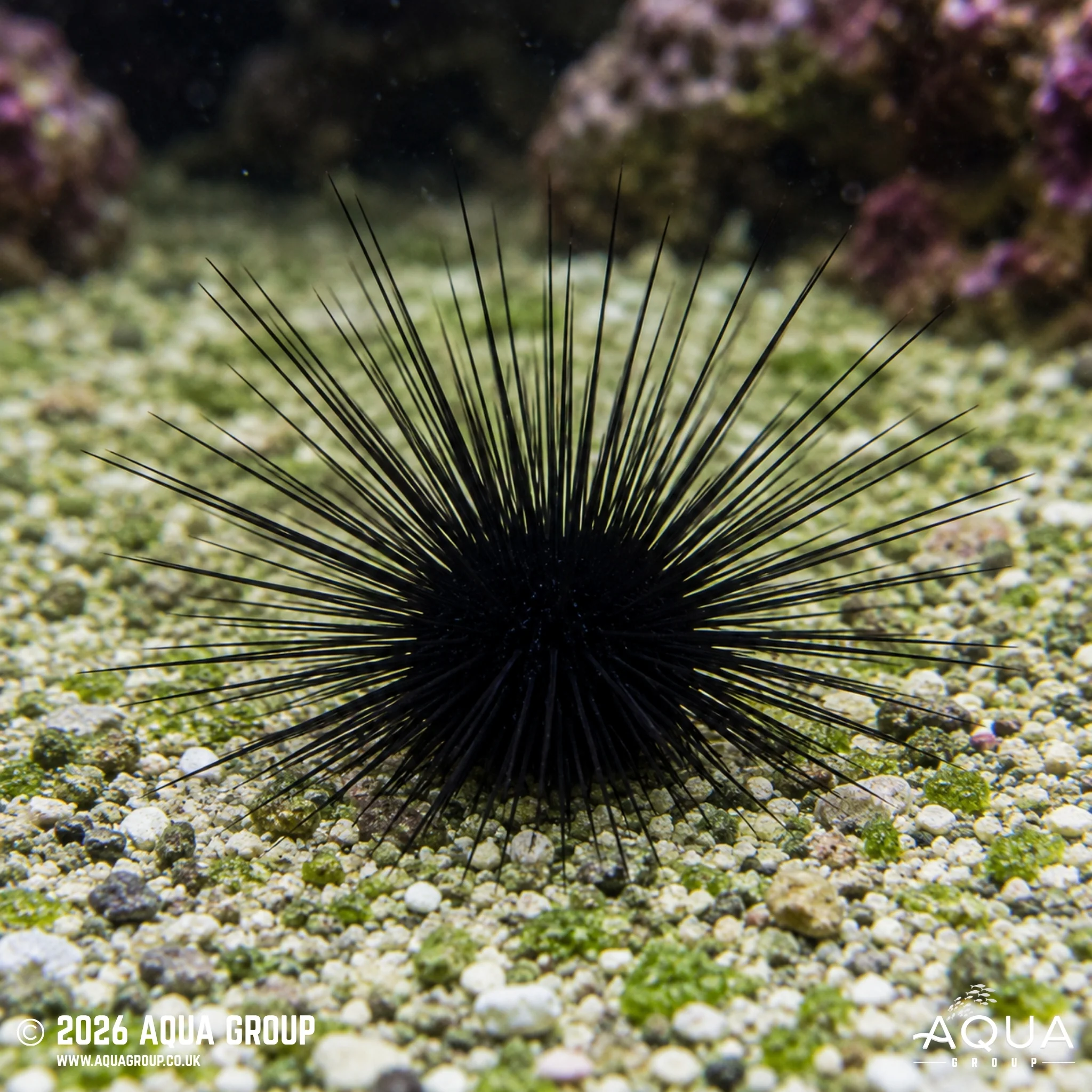
The Long Spine Urchin, Diadema setosum, is a striking marine algae grazer with a dark central body and extremely long, fine black spines. Also known as the Black Long Spine Urchin or Long-spined Sea Urchin, it can be a useful addition to mature marine aquariums where natural algae control is needed. It is generally reef safe with corals, but it must be given plenty of space, stable water quality and careful handling due to its sharp venomous spines.
Common Name:
Long Spine Urchin, Black Long Spine Urchin, Long-spined Sea Urchin, Porcupine Sea Urchin.
Scientific Name (Latin):
Diadema setosum
Maximum Size:
Body size is usually much smaller than the full spread, but the spine span can become very large. Allow for up to around 30–60 cm total spread in suitable conditions.
Water Type:
Marine
Origin / Natural Habitat:
Indo-Pacific and wider tropical marine regions. In the wild, Long Spine Urchins occur on coral reefs, rocky coastlines, rubble zones, sandy and rocky substrates, seagrass areas and reef slopes. They often shelter in crevices or shaded areas by day and graze algae from rock, coral rubble and hard surfaces.
Water Parameters:
Temperature: 24–27°C
pH Range: 8.1–8.4
Hardness or Salinity: Marine salinity 1.023–1.026 specific gravity; stable alkalinity, calcium and magnesium levels are important for healthy spine and skeleton growth.
Temperament:
Peaceful, but physically defensive. It will not attack fish or corals, but its long spines can injure fish, aquarists or other animals if contact occurs. It may also push through rockwork and loose coral frags while grazing.
Diet:
Herbivorous grazer. Feeds mainly on algae, biofilm and film growth from live rock, glass and hard surfaces. Supplement with dried seaweed, nori, algae sheets, spirulina-based foods and marine herbivore wafers if natural algae becomes limited. Do not add to a sterile or brand-new aquarium with little grazing available.
Minimum Tank Size:
A minimum of 200 litres is recommended, with larger aquariums strongly preferred. This species has a wide spine span and needs open rockwork, stable aquascaping and enough algae growth to support grazing.
Behaviour & Activity:
A mostly nocturnal or low-light grazer that moves slowly across rock, glass and substrate while feeding. It may spend the day tucked into rockwork with the long spines extended for protection, becoming more active after lights dim. It can carry small loose items, shells or fragments and may dislodge unsecured coral frags as it moves.
Reef Safe:
Reef Safe with Caution
Generally safe with corals, but caution is needed due to its size, spines and ability to knock over loose frags or small rock pieces. It may graze coralline algae as well as nuisance algae.
Special Requirements or Care Notes:
Handle with extreme care and never lift by hand. The long spines are sharp, brittle and mildly venomous, causing painful punctures if touched. Use a container rather than a net where possible, and keep away from children or situations where accidental contact is likely. Provide mature live rock, stable salinity, excellent water quality and securely fixed rockwork and coral frags. Avoid keeping with triggerfish, puffers, large wrasses or other fish that may attack urchins.
Suitable for:
Intermediate to experienced marine fishkeepers
Availability:
Occasional in trade / Specialist marine clean-up crew species
All images are a visual representation of the animal you will receive, made to be as accurate as possible. Please note that Mother Nature is a wonderful thing, and variation in patterns and colours will occur — that is part of the unique beauty of these animals.
Product Information
Product Information
Shipping & Returns
Shipping & Returns
Long Spine Urchin - Diadema setosum
Long Spine Urchin - Diadema setosum
Long Spine Urchin (Diadema setosum)
The Long Spine Urchin, Diadema setosum, is a striking marine algae grazer with a dark central body and extremely long, fine black spines. Also known as the Black Long Spine Urchin or Long-spined Sea Urchin, it can be a useful addition to mature marine aquariums where natural algae control is needed. It is generally reef safe with corals, but it must be given plenty of space, stable water quality and careful handling due to its sharp venomous spines.
Common Name:
Long Spine Urchin, Black Long Spine Urchin, Long-spined Sea Urchin, Porcupine Sea Urchin.
Scientific Name (Latin):
Diadema setosum
Maximum Size:
Body size is usually much smaller than the full spread, but the spine span can become very large. Allow for up to around 30–60 cm total spread in suitable conditions.
Water Type:
Marine
Origin / Natural Habitat:
Indo-Pacific and wider tropical marine regions. In the wild, Long Spine Urchins occur on coral reefs, rocky coastlines, rubble zones, sandy and rocky substrates, seagrass areas and reef slopes. They often shelter in crevices or shaded areas by day and graze algae from rock, coral rubble and hard surfaces.
Water Parameters:
Temperature: 24–27°C
pH Range: 8.1–8.4
Hardness or Salinity: Marine salinity 1.023–1.026 specific gravity; stable alkalinity, calcium and magnesium levels are important for healthy spine and skeleton growth.
Temperament:
Peaceful, but physically defensive. It will not attack fish or corals, but its long spines can injure fish, aquarists or other animals if contact occurs. It may also push through rockwork and loose coral frags while grazing.
Diet:
Herbivorous grazer. Feeds mainly on algae, biofilm and film growth from live rock, glass and hard surfaces. Supplement with dried seaweed, nori, algae sheets, spirulina-based foods and marine herbivore wafers if natural algae becomes limited. Do not add to a sterile or brand-new aquarium with little grazing available.
Minimum Tank Size:
A minimum of 200 litres is recommended, with larger aquariums strongly preferred. This species has a wide spine span and needs open rockwork, stable aquascaping and enough algae growth to support grazing.
Behaviour & Activity:
A mostly nocturnal or low-light grazer that moves slowly across rock, glass and substrate while feeding. It may spend the day tucked into rockwork with the long spines extended for protection, becoming more active after lights dim. It can carry small loose items, shells or fragments and may dislodge unsecured coral frags as it moves.
Reef Safe:
Reef Safe with Caution
Generally safe with corals, but caution is needed due to its size, spines and ability to knock over loose frags or small rock pieces. It may graze coralline algae as well as nuisance algae.
Special Requirements or Care Notes:
Handle with extreme care and never lift by hand. The long spines are sharp, brittle and mildly venomous, causing painful punctures if touched. Use a container rather than a net where possible, and keep away from children or situations where accidental contact is likely. Provide mature live rock, stable salinity, excellent water quality and securely fixed rockwork and coral frags. Avoid keeping with triggerfish, puffers, large wrasses or other fish that may attack urchins.
Suitable for:
Intermediate to experienced marine fishkeepers
Availability:
Occasional in trade / Specialist marine clean-up crew species
All images are a visual representation of the animal you will receive, made to be as accurate as possible. Please note that Mother Nature is a wonderful thing, and variation in patterns and colours will occur — that is part of the unique beauty of these animals.
Original: $50.94
-70%$50.94
$15.28Product Information
Product Information
Shipping & Returns
Shipping & Returns
Description
Long Spine Urchin (Diadema setosum)
The Long Spine Urchin, Diadema setosum, is a striking marine algae grazer with a dark central body and extremely long, fine black spines. Also known as the Black Long Spine Urchin or Long-spined Sea Urchin, it can be a useful addition to mature marine aquariums where natural algae control is needed. It is generally reef safe with corals, but it must be given plenty of space, stable water quality and careful handling due to its sharp venomous spines.
Common Name:
Long Spine Urchin, Black Long Spine Urchin, Long-spined Sea Urchin, Porcupine Sea Urchin.
Scientific Name (Latin):
Diadema setosum
Maximum Size:
Body size is usually much smaller than the full spread, but the spine span can become very large. Allow for up to around 30–60 cm total spread in suitable conditions.
Water Type:
Marine
Origin / Natural Habitat:
Indo-Pacific and wider tropical marine regions. In the wild, Long Spine Urchins occur on coral reefs, rocky coastlines, rubble zones, sandy and rocky substrates, seagrass areas and reef slopes. They often shelter in crevices or shaded areas by day and graze algae from rock, coral rubble and hard surfaces.
Water Parameters:
Temperature: 24–27°C
pH Range: 8.1–8.4
Hardness or Salinity: Marine salinity 1.023–1.026 specific gravity; stable alkalinity, calcium and magnesium levels are important for healthy spine and skeleton growth.
Temperament:
Peaceful, but physically defensive. It will not attack fish or corals, but its long spines can injure fish, aquarists or other animals if contact occurs. It may also push through rockwork and loose coral frags while grazing.
Diet:
Herbivorous grazer. Feeds mainly on algae, biofilm and film growth from live rock, glass and hard surfaces. Supplement with dried seaweed, nori, algae sheets, spirulina-based foods and marine herbivore wafers if natural algae becomes limited. Do not add to a sterile or brand-new aquarium with little grazing available.
Minimum Tank Size:
A minimum of 200 litres is recommended, with larger aquariums strongly preferred. This species has a wide spine span and needs open rockwork, stable aquascaping and enough algae growth to support grazing.
Behaviour & Activity:
A mostly nocturnal or low-light grazer that moves slowly across rock, glass and substrate while feeding. It may spend the day tucked into rockwork with the long spines extended for protection, becoming more active after lights dim. It can carry small loose items, shells or fragments and may dislodge unsecured coral frags as it moves.
Reef Safe:
Reef Safe with Caution
Generally safe with corals, but caution is needed due to its size, spines and ability to knock over loose frags or small rock pieces. It may graze coralline algae as well as nuisance algae.
Special Requirements or Care Notes:
Handle with extreme care and never lift by hand. The long spines are sharp, brittle and mildly venomous, causing painful punctures if touched. Use a container rather than a net where possible, and keep away from children or situations where accidental contact is likely. Provide mature live rock, stable salinity, excellent water quality and securely fixed rockwork and coral frags. Avoid keeping with triggerfish, puffers, large wrasses or other fish that may attack urchins.
Suitable for:
Intermediate to experienced marine fishkeepers
Availability:
Occasional in trade / Specialist marine clean-up crew species
All images are a visual representation of the animal you will receive, made to be as accurate as possible. Please note that Mother Nature is a wonderful thing, and variation in patterns and colours will occur — that is part of the unique beauty of these animals.